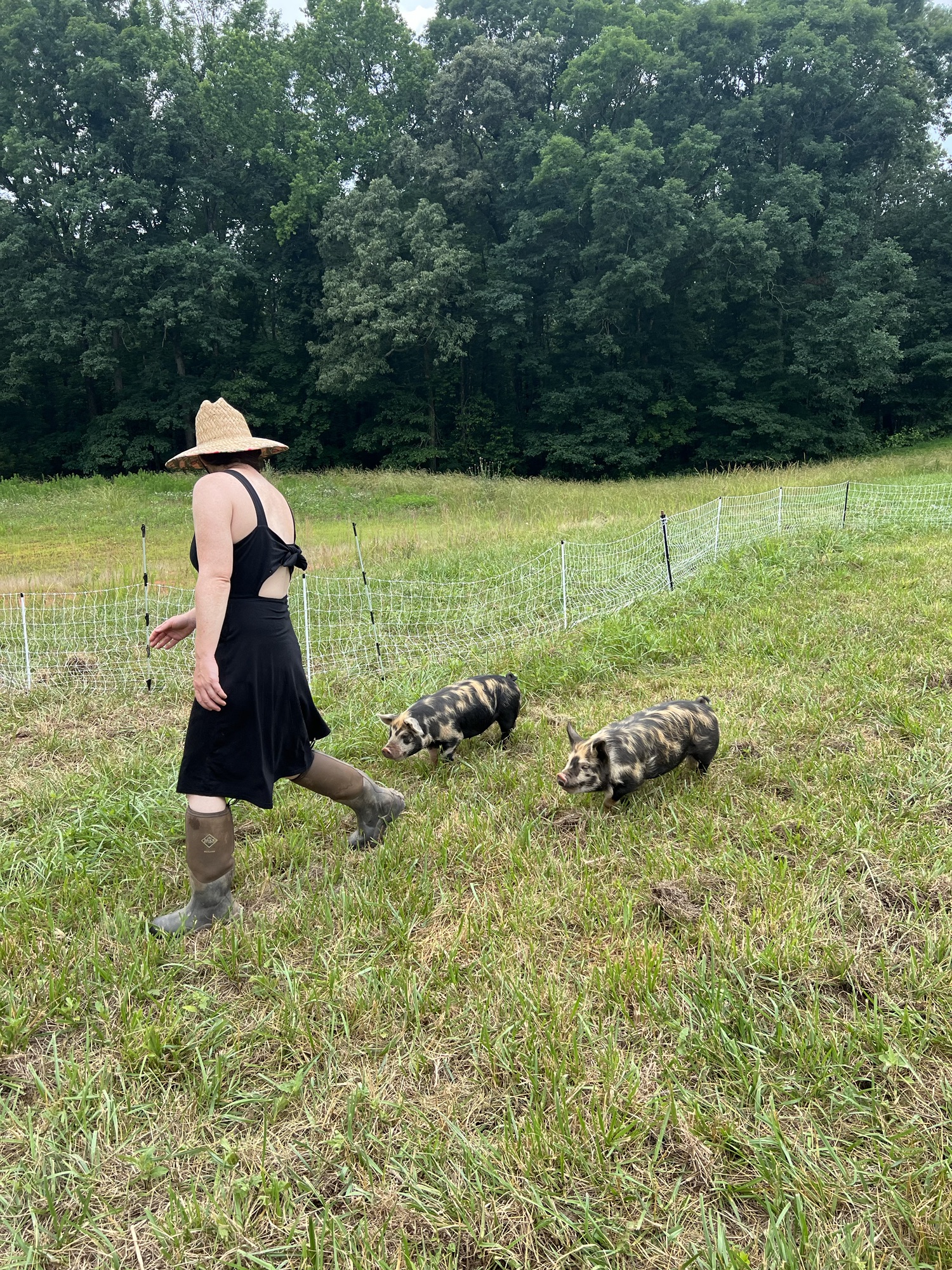


I’ll be the first to admit that sometimes I feel like an imposter when I refer to my property as a farm and myself as a farmer. At this stage, I’m essentially running a large garden, raising two pigs, and battling with grass and weeds that seem to grow faster than I can keep up with, even with my trusty tractor. But even on this micro-scale, it’s taken a considerable amount of effort and learning to get to where I am. So, while overgrown grass may be my primary yield right now, it is indeed a farm. With that said, I want to share what I’ve learned so far on this journey, acknowledging that I’m no expert, but hoping to pass on some helpful insights to others starting out.
Get to Know Other Farmers
Starting out in farming can be daunting, especially when many farmers come from generations of farming families. They’ve both inherited knowledge and had the opportunity to learn the skills of the trade from childhood, and they have a network of experienced individuals to turn to for guidance. Despite feeling like I’ve asked countless “dumb” questions to established farmers, who I have been privileged to meet both through my career in sustainability and locally in my agrarian community, I’ve found them all to be incredibly gracious with their time and expertise. Asking questions has been essential in my journey, even when the answers don’t align with what I’ve read elsewhere or ultimately what I plan to pursue. Understanding what other farmers are doing, and why, can be immensely valuable as you navigate your own farming decisions.
Do Your Homework
In addition to learning from other farmers, I’ve found a wealth of resources online. YouTube tutorials, books, forums, podcasts, and even engaging in professional networks like LinkedIn have all been invaluable in exploring different approaches to farming. For example, I’ve spent hours watching YouTube videos on pastured sheep rearing from The Shepherdess, only to opt for pigs as my first livestock. Books like Joel Salatin’s “You Can Farm: The Entrepreneur’s Guide to Start & Succeed in a Farming Enterprise” have provided me with a foundational understanding, even though I’ve deviated from some of the traditional advice. While hands-on experience is irreplaceable, online resources can equip you with essential knowledge. I did much of my initial research before purchasing my farm, but I continue to learn and adapt every day.
Tap Into Local Resources
Local agricultural resources can be a goldmine for beginner farmers. Here in Georgia, the University of Georgia offers agricultural extension services tailored to each county. I’m fortunate to have access to a proactive local agent who organizes helpful programs like the recent “Help on the Homestead” course. The USDA also provides support for beginning and female farmers through its field offices. Resource availability may vary by state and region, so it’s worth exploring what’s available in your area.
Have A Plan, Even If You Don’t Stick To It!
I’m naturally inclined to plan and make lists. When I made the leap to living on the farm full-time in January 2024, I had a clear list of tasks and priorities to tackle before bringing animals onto the farm. Establishing functional pastures became a priority, leading to the significant investment in a tractor. However, as my to-do list seemed to outgrow my progress, I realized the importance of reassessing my plan. While ruminants, particularly sheep and cattle, are an essential part of my long-term plan, the extensive infrastructure required, such as cross fencing and water infrastructure, makes it a more daunting endeavor. So, I opted for pigs as my first livestock. With basic equipment like electric fencing and makeshift shelters, it was a more manageable starting point for me. This experience taught me that it’s okay to deviate from the plans outlined in color-coded spreadsheets, but documenting your plans is crucial regardless of the method you choose.
Keep Records
Keeping detailed records of plants, animals, and expenses is vital for any farmer, regardless of their goals. Even if your aim is simply self-sufficiency, tracking expenses and monitoring plant and animal health can provide invaluable insights into your progress. For me, a simple spreadsheet and business plan document have sufficed so far, but I anticipate refining these tools as my operation grows.
More to Come
There are countless topics I’ve only briefly touched on in this post. I plan to delve deeper into some of these subjects in future, more detailed posts. I also welcome any feedback or suggestions on tools that have helped you on your own farming journey. Every day at Deer Creek Pastures brings new adventures and learning experiences. While I’m confident my plans will continue to evolve as I refine what works best for my farm, I also acknowledge that I’ll learn many lessons the hard way. Nevertheless, I feel incredibly blessed to pursue this path and embrace a field that I’m truly passionate about.
Leave a Reply