

Beginnings: From Feeders to Friends
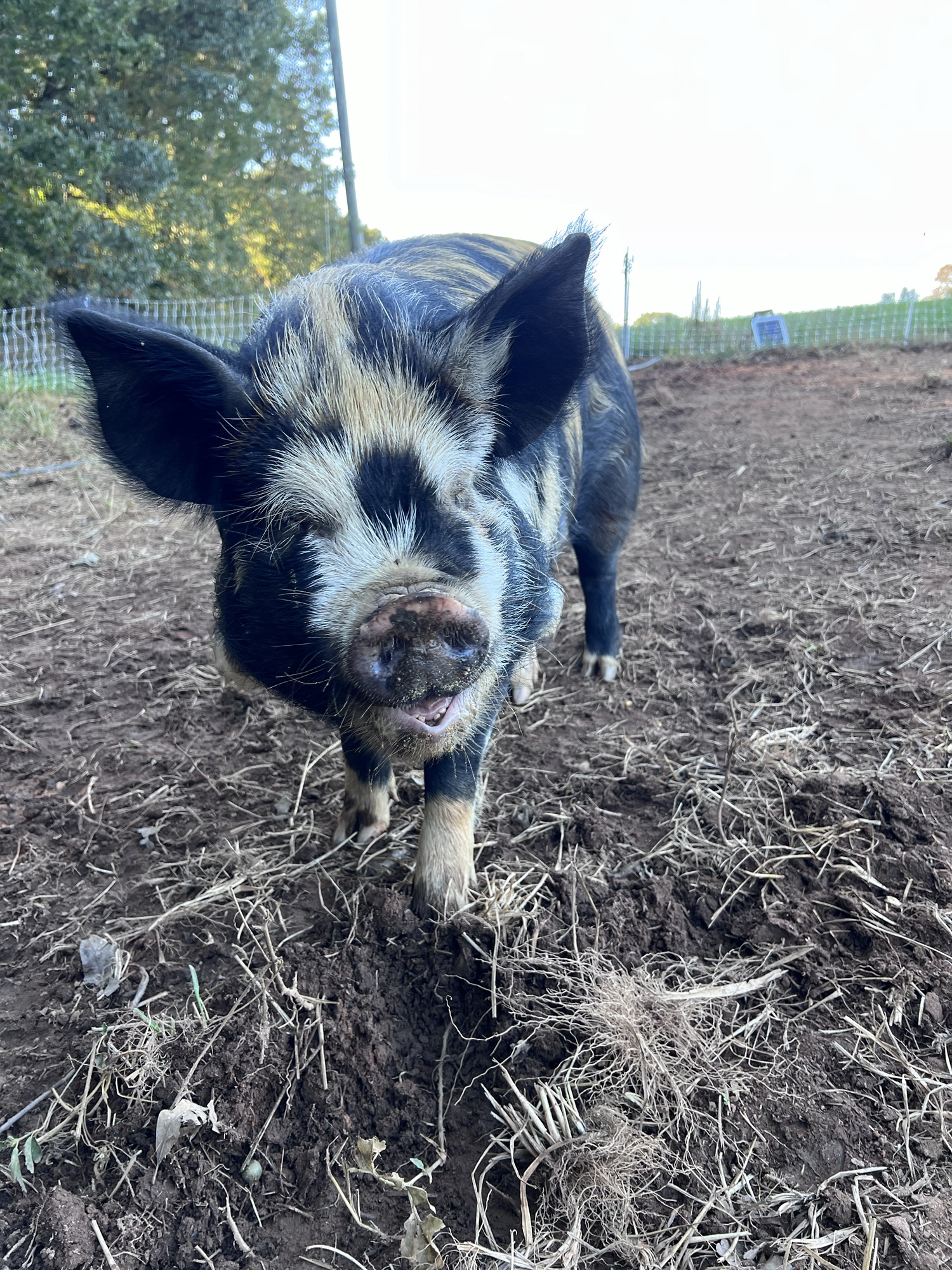
Dolly and Loretta came to Deer Creek Pastures as feeder pigs (un-registered Idaho Pasture Pigs) in April 2024. They were never meant to be breeding stock, just two pigs raised with care for a season (or longer). But from the start, they were more than just livestock – they were my first farm animals and beloved. Dolly, with her sweet nature and excellent snout and wattles, had me briefly considering whether she might have a place as a breeder. Loretta was equally endearing, and together, they quickly became a source of joy on the farm.
The Shift: From Pets to Pastured Pigs
For months, they behaved more like pets, meeting me at the fence, nudging for treats, flopping down for belly rubs and following me around with an eager curiosity. But everything changed in July. With their hormonal shift came a noticeable change in behavior—more aggressive, more food-motivated, less like companions and fully embracing their marvelous pigness as the pastured farm animals they were always meant to be. They tore up structures (apparently pigs love the sound of ripping tarp), rooted where they shouldn’t, and made it increasingly difficult to keep them protected from the elements. The idyllic vision of Idaho Pasture Pigs as gentle grazers proved to be only partially true—once maturity set in, rooting became their favorite pastime (and their natural inclination).
The Decision: A Difficult but Necessary Choice
Processing was always a potential plan, but it didn’t make the decision any easier. I had raised them from April until January, feeding them at least twice a day, rarely missing a single meal. As a solo farmer, visiting them during my lunch breaks to feed extra treats was often a highlight of the day. Even when they were being aggressive, I still found them cute and endearing. Aside from a few short trips away from the farm where someone else took over, I was their constant caretaker. The idea of letting them go was heartbreaking, yet I knew this was the reality of raising meat with integrity. I could be both deeply sad to say goodbye and incredibly grateful for their lives and the sustenance they would provide.

The Logistics of Processing: More Challenging Than Expected
Getting pigs processed is no simple task, especially in my rural region that is largely still analog. Many of the processors and transport options are by word of mouth with minimal reviews on Yelp or listings on Google. During deer season, many processors are booked solid. I had to make many phone calls and finally found a transport connection through my local farm supply store when I visited in person —an employee’s brother kindly agreed to help deliver them to the processor. Finding a processing date that worked with transportation logistics was trickier than I ever expected.
The Loading: A Lesson in Patience
On the day of transport, the pigs had other ideas. It took three and a half hours to get them onto the trailer. They didn’t trust the shiny metal ramp, so we had to cover it in hay to make it look and feel familiar. Treats helped, but only so much. Their transporter even busted out his lasso at one point, but Dolly and Loretta managed to avoid being hog tied. We took breaks, utilized the tractor to do some dirt work, adjusted our approach, and made sure they couldn’t escape under the trailer. Throughout the challenging afternoon, they ate through five pounds of apples, grapes, corn, and ALL the treats. By the time they were loaded on the trailer, I was emotionally (and physically) exhausted—and I hadn’t even said goodbye yet.
The Goodbye: A Sad Farewell
The drive to the processor was a long 45 minutes and quiet. I cried—a lot. The reality of a big storm coming the next day and torrential rain starting during the drive added a strange sense of relief. Had we waited any longer on transport, the trailer wouldn’t have been able to reach the pig pen due to muddy conditions. When we arrived at the processor, Dolly and Loretta refused to leave the trailer. Eventually, with more treats as bribery, they were settled into a small holding pen for their final night, with cover to keep them comfortable and dry, fresh water, and snacks.
Honoring Their Lives: Nose to Tail Utilization
If I was going to raise these pigs with care, I owed it to them to use as much of the animal as possible. They each had a hanging weight of ~200 pounds, which means their live weight was well over 250 pounds (for context they arrived at the farm weighing 40 pounds, so those girls put on weight like champs). I made sure to request the jowl for bacon and the fat for lard, ensuring nothing was wasted. Understanding the processing method was important—how they were killed determined whether I could harvest certain cuts. Every choice was made with respect for Dolly and Loretta, a way to honor the lives they lived.
Reflection: The Reality of Ethical Farming
Raising animals for food is an emotional journey. It’s easy to feel many things at the same time—joy when they’re small and playful as well as when they were excited for treats, frustration when they test their boundaries, sadness when it’s time to say goodbye, anxiety when storms hit. But farming requires a both/and mindset, where two things can be true at the same time. I am both sad and grateful. I miss them, but I know their lives were good, their deaths were handled with care, and the nourishment they provide will be deeply appreciated. They knew no bad days during their time at Deer Creek Pastures, and I consider that a big success for my first time raising animals for meat. I now have a freezer full of antibiotic free pastured pork that I have been able to share with family and friends, and in the coming weeks I will be rendering lard and experimenting with soap making.
This is the reality of small-scale ethical meat production: raising animals with love, honoring their purpose, and feeling every emotion along the way. It’s extremely hard, but it’s also incredibly rewarding.


Leave a Reply