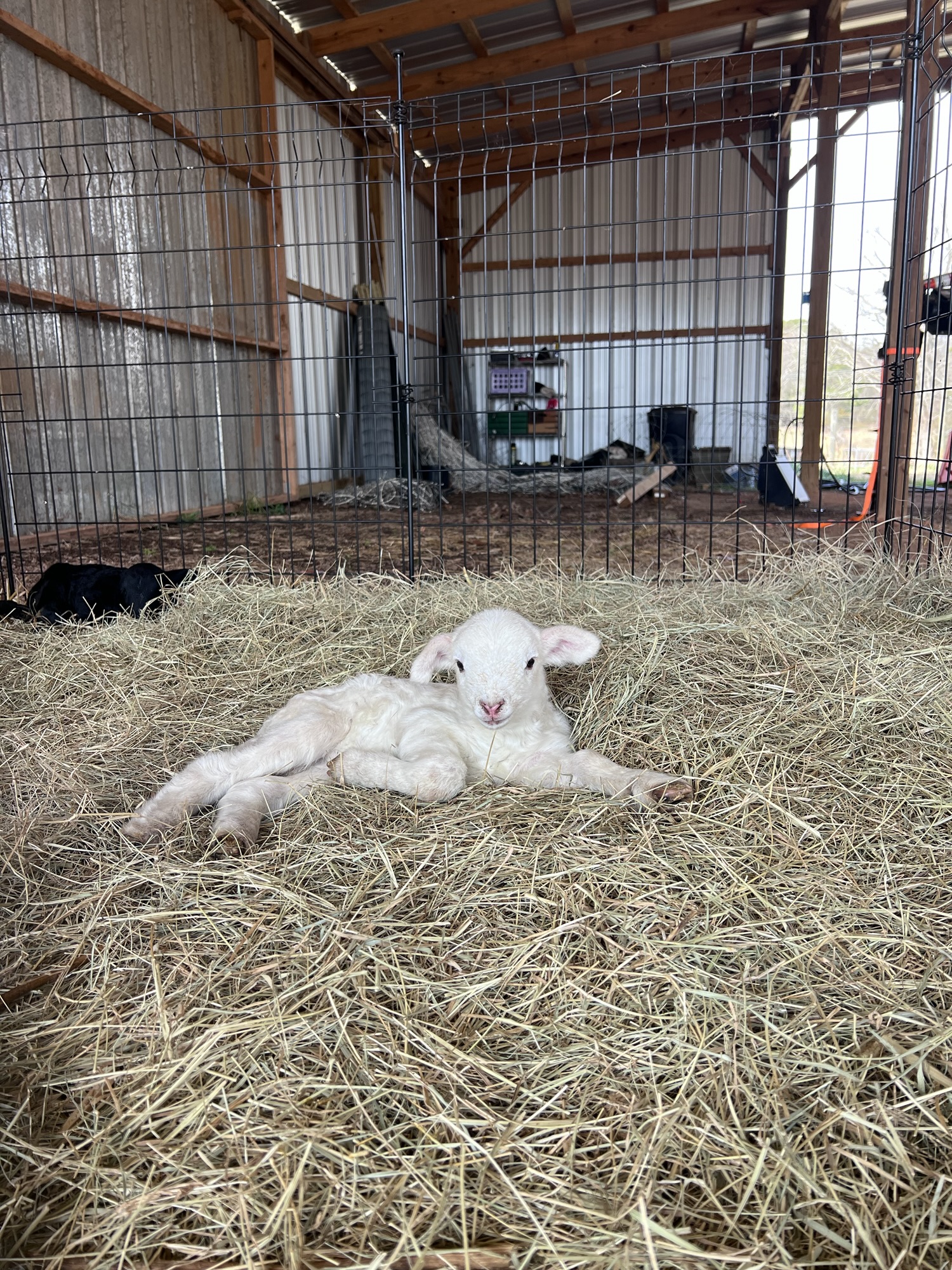


February 2026 marked my second lambing season at Deer Creek Pastures, which feels both small and enormous at the same time. Last year I had three babies hit the ground: two ram lambs, Tater Tot and Huckleberry, and one little ewe, Jelly Bean. It felt monumental then as they were the first animals born on the farm. This year felt different because this was the first season my own rams were mature enough to breed for spring lambing. That shift carries a different kind of weight. These genetics, these outcomes, these late nights are now more fully mine.
It also meant I had absolutely no idea when anyone was due. Because of biosecurity concerns related to caseous lymphadenitis (CL), I kept rams and ewes together over the past year rather than rotating and separating pens. That was the right call for disease and labor management, but it removed the comfort of due dates. Instead of penciled calendars and countdowns, I had guesswork. In late January, three ewes started showing signs. Stevie. Rosemary. Snickerdoodle. And so began the waiting game.
For weeks, I checked udders morning and night. I watched for swelling, mucus plugs, changes in posture, subtle behavioral shifts that might indicate labor was near. Rosemary in particular kept me on edge. I was convinced daily that she would lamb “any minute now.” She did not.
Stevie Goes First
Stevie Nicks broke the suspense at 8 am on a Wednesday, just before my 9 am meeting. As if she had checked my Google calendar and decided that was the perfect time. She delivered twin rams, one black and one brown, in a swift and efficient labor that felt almost cinematic in its ease. Both lambs were on their feet within minutes, wobbling but determined.
Given that black coloring is recessive in sheep, I can confidently say Mac, the black lamb, is Huckleberry’s son. Based on his coloring and build, I am assuming Buck is Tater Tot’s. Sheep, in case you did not know, can have twins by different sires. I run a small farm, but the genetics are apparently keeping things interesting.
They spent part of their first day in a field pen before moving into the lambing jug in the barn. Everything about Stevie’s delivery felt smooth and competent. I allowed myself a quiet exhale. Maybe this season would unfold gently.


Snickerdoodle: Joy and Loss
Less than 48 hours later, Snickerdoodle went into labor. Her first lamb, a little ewe I named Sugar Cookie, was slow to rise but stable. While Snickerdoodle was still licking her clean, I saw another set of hooves. The labor progressed in steady cadences that did not suggest I needed to intervene. I watched, keeping a timer running, and stayed close but hands-off.
When the second lamb hit the ground, though, it was still. After just two licks, Snickerdoodle stepped away.
I grabbed towels and tried to work quickly but carefully. I dried the lamb vigorously, held it to encourage fluid drainage from the lungs, searched for a heartbeat. There was none. That night, I buried the stillborn lamb and kept a close watch on Snickerdoodle and Sugar Cookie.
There is a particular ache that comes from holding new life and loss in the same hour. Farming compresses emotions like that.

Electric Fence Bootcamp
The next morning, I moved Stevie and her twins into a small paddock of electric netting with partial barn cover to begin fence training. Freeing up the lambing jug allowed me to move Snickerdoodle and Sugar Cookie into the barn. After a couple of days, everyone joined together for electric fence bootcamp.
Watching tiny lambs test boundaries and learn quickly felt like a small victory. Sugar Cookie, Mac, and Buck have become fast friends and zoom around the pen every evening.


Rosemary, Salt, and Pepper
Four days later, Rosemary finally lambed. Twins again. A black ewe and a white ram. Salt and Pepper, because when an herb has twins, you lean into the seasoning theme.
She had previously delivered single lambs (Snickerdoodle is her daughter and Tater tot is her son), but she handled the twins beautifully at first. She was attentive, steady, and the lambs were nursing well.
Four days later, she passed suddenly in the night.
I discovered it at 5 am on a Saturday through the barn camera. The night before she was up, drinking water, allowing the twins to nurse, and then the next morning she did not rise. The likely cause was internal bleeding, hypocalcemia or metabolic shock from the strain of twins. It exposed a clear gap in my lambing kit. I did not have calcium on hand. I will next year. That lesson is seared in.
There is no time to collapse when you have orphan lambs blinking at you. I moved quickly into action. Compost burial for Rosemary. Immediate care for Salt and Pepper.
Thankfully, I had stocked up on lamb milk replacer from Premier 1 Supplies and bottles with Pritchard teats earlier in the season, always with the quiet hope that I would not need them. We began on a strict three-hour feeding schedule, around the clock. Over the past week, I have stretched that to every four to five hours, with a six-hour window overnight. I will continue bottle feeding for six to eight weeks before weaning.
Bottle feeding orphan lambs is equal parts tenderness and exhaustion. There is something deeply bonding and sweet about holding a lamb at 5 am under a headlamp glow. There is also something deeply tiring about functioning on broken sleep while feeding lambs in the middle of the night, showing up for work Zoom meetings, and tending to a growing farm.
Both things are true.


Scaling the Flock and Small Wins
Despite the ups and downs, this season marks a milestone. The flock now numbers eleven. I started with two sheep, Whitney and Stevie, in the summer of 2024. In December 2024, I added four more, including two pregnant ewes. Seeing double digits feels like tangible progress.
Growth on a farm can feel invisible for long stretches, and then suddenly it is bouncing around your pasture on skinny legs.
Alongside the lambs, I received encouraging health news from the vet. My recent six-month retest for CL came back clean. This is the second consecutive clean round for the current flock. Once I reach the two-year mark, I can confidently say I have eradicated CL, but for now, this feels like a significant step forward and a genuine relief.
After last year’s disease setbacks, clean results instill hope and energy into my little sheep operation.
Closing Thoughts
This lambing season stretched me more than I anticipated. I witnessed all three sets of twins being born, something few people get to see anymore. The joy in seeing new life coming into the world and then walking within minutes is hard to describe. I also buried a ewe lamb and a momma ewe. I learned where my systems were strong and where they were thin. I used my headlamp more and slept less than I care to admit. I felt capable and overwhelmed, sometimes within the same hour. But also, I feel extremely proud of myself for making progress slowly but steadily.
The flock is growing, and I am growing with it.


Leave a Reply