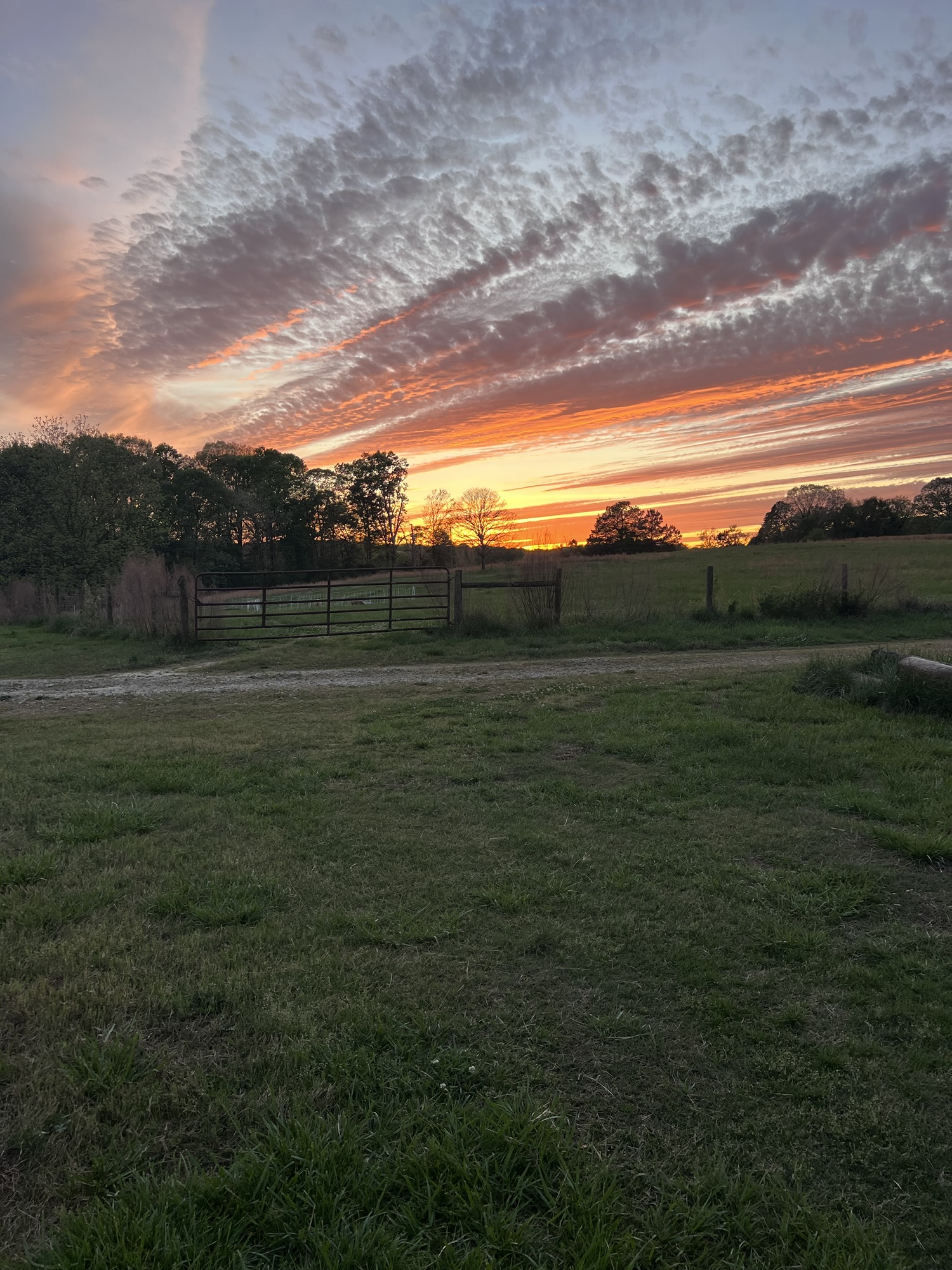


One of the things I have learned since starting Deer Creek Pastures is that a solo farmer does not just farm. A solo farmer wears hats. A lot of them. And not just the wide brimmed hats and baseball caps that I wear daily to protect my skin from the sun.
When people picture farming they tend to imagine peaceful scenes. There’s the romantic notion of the farmer walking through pasture at sunset. Chickens scratching in the dirt. Maybe a picturesque barn in the background.
Those moments exist here at Deer Creek Pastures. They are part of why I love this life. Few things spark me more joy than visiting with Beatrice and Bunny during my evening chore rounds at sunset.
But those moments are only a small slice of what it takes to actually run a farm. Behind every grazing ewe and every happy cow is a long list of other jobs that have nothing to do with tending animals or growing grass. Some of these hats I expected when I started the farm. Others have surprised me along the way. Some I genuinely enjoy. Others I tolerate because if I do not do them, they simply do not get done.
Perhaps the biggest lesson I have learned so far is that perfectionism has no place here. Farming rewards progress, not perfection. Sometimes good enough really is good enough so you can move on to the next hat waiting on the rack. And lately, I have been wearing quite a few.


The Web Designer Hat
You may notice a few changes around this site in the coming months.
When I first built the Deer Creek Pastures website, it functioned mostly as a place to share updates about the farm. A bit of storytelling, cute photos of sheep and cows, and a window into what I’ve been building.
Now the farm is evolving into something more tangible as a business. As I begin offering direct-to-consumer lamb shares starting summer 2026, the website needs to evolve too. That means improving the structure, clarifying what I offer, and making it easier for customers to learn about pasture-raised meat from northeast Georgia.
So now, in addition to feeding animals, I occasionally spend evenings wrestling with website layouts and SEO.
The Marketing Department
Marketing currently consists mostly of posting photos of my cows and sheep on Instagram as if they are minor celebrities. Honestly, I love that for them.
While I do not run elaborate campaigns or paid ads in this early stage, social media has become a simple way to share life on the farm and connect with people who care about where their food comes from.
Turns out fluffy calves and grazing sheep are excellent brand ambassadors.
The Accountant
Running a farm means running a business, and businesses have spreadsheets and financial records. Over the past year I have refined my systems for tracking expenses and income on a monthly basis. Every bale of hay, every mineral bag, every vet visit.
All of it feeds into the numbers that eventually show up on my Schedule F when tax season arrives. Thankfully I outsource the actual tax preparation to a fantastic accountant who understands agriculture. That particular hat is one I am happy to hand off.
The Tractor Mechanic
This is a newer hat. Like many farmers, I have learned that tractors tend to develop problems at the exact moment you need them most.
Over the past few weeks I have tackled coolant maintenance and attempted to troubleshoot a PTO engagement issue that appears to be caused by a seat safety switch.
When bush hogging season has just begun, taking the tractor out of commission would not be ideal. So I find myself learning from tractor forums, YouTube videos, and the occasional late night dive on Reddit..
I would like to get better at this over time. I am even considering taking a diesel technician class so I can become more self-sufficient and reduce repair costs.
The Land Manager
Healthy pasture does not happen by accident.
Maintaining my fields requires active management, and right now that includes plenty of bush hogging. Cutting back weeds helps prevent them from overtaking the fescue that forms the base of my grazing system.
As I continue expanding the herd and flock, the animals themselves will do more of the work through rotational grazing, which I have already started incorporating but the sheep field currently has more grass than the sheep can eat. Managing the electric netting to move my sheep routinely to fresh grass is a critical part of my land management duties.
But even with grazing animals, well-timed mowing remains an important tool for keeping pastures productive.
The Fence Repair Woman
If you own livestock, you also own fences. And occasionally those fences fail.
Whether it is tension loosening, a fallen tree, or an animal discovering a creative escape route, repairs inevitably fall to me. That said, I do know my limits.
This year I am upgrading one field with sheep and goat wire around the perimeter. For anyone who has wrestled with large rolls of woven wire, you know it is not exactly a one-person operation. Between maintaining proper tension and maneuvering the wire, I decided this was a job worth outsourcing.
My future sanity will thank me when sheep decide to test the electric netting while I am out of town only to be contained by the perimeter fence.
The Logistics Coordinator
Farming involves far more phone calls than I expected, and I would frankly prefer to send an email (but things are still a bit old school around here).
Recent logistical adventures have included coordinating agricultural lime deliveries, sourcing replacement ewes to diversify genetics in the flock, planning the processing of my 3 ram lambs for summer 2026 at a local USDA inspected processing facility, and scheduling artificial insemination (AI) for the cows when they came into heat.
Each task requires planning, timing, and more than a few conversations with suppliers and specialists. It turns out the quiet life of farming includes a surprising amount of administrative coordination.
Caretaker of the Animals
Of all the hats, this one matters most and is my favorite.
The animals are typically fed and watered before I take my first sip of coffee in the morning; sunlight in the eyes plus animals running up to greet you is an elite way to start the day. For the past six weeks I have also been feeding Salt and Pepper, my bottle lambs, multiple times a day.
Their needs typically take priority. I am far more likely to drive into town in the dark for livestock supplies than I am for something I need for myself.
The Amateur Vet
To be clear, I have zero veterinary training. But livestock owners quickly learn that calling the vet for every small issue would become very expensive.
So we troubleshoot. We Google. Occasionally we upload photos to ChatGPT in a mild state of panic.
So far I have successfully identified lice, ringworm, orf, and roundworm infections. Unfortunately parasites are very enthusiastic participants in farm life.
Of course there are moments when professional help is required. For example, when Betty recently managed to get a thorny branch stuck up her nose. That was definitely a vet call.
The W-2 Employee
All of the above hats require both time and money. To support the farm as it grows, I continue to work full time for a SaaS company as a sustainability subject matter expert.
The day job pays the bills and funds the infrastructure that allows Deer Creek Pastures to keep evolving.
It also means the farm work happens early in the morning, during lunch breaks, in the evenings, and on weekends. Efficiency becomes important when your day technically contains two full-time jobs.
The Basic Adulting Hat
Then there are the basic life tasks.
Keeping the house clean and maintained. Meal prepping food that supports my protein goals and workouts. Staying healthy enough to show up for the animals every day. Lots of laundry because the land management, tractor mechanic, and vet hats often leave my clothes covered in filth.
None of it is glamorous. All of it matters. All of it is worth the effort.
Because if the farmer falls apart, the farm does too.
Learning to Prioritize the Hats
Earlier this year I was feeling overwhelmed by some of these roles and the day to day decision making required when you’re responsible for a farm and the animal inhabitants.
I have a strong desire to grow the farm and continue scaling the sheep and cattle operations with intention and care. But I found myself stuck trying to decide what the next right move should be and spiraling down research rabbit holes as a form of procrastination.
For the past six weeks I have been working with a farm coach. Think life coach, but very specifically focused on farming businesses. Having a thought partner who understands the complexity of agriculture has been incredibly helpful. Together we work through priorities, decisions, and which hat deserves attention first.
The clarity it has brought has been genuinely game changing. The reality of solo farming is that the hats never go away. The goal is simply learning which one to wear today and building out systems that make the hats easier to pull off. And occasionally accepting that some days require wearing all of them at once.


Leave a Reply